What can you learn from doing a simple poll?

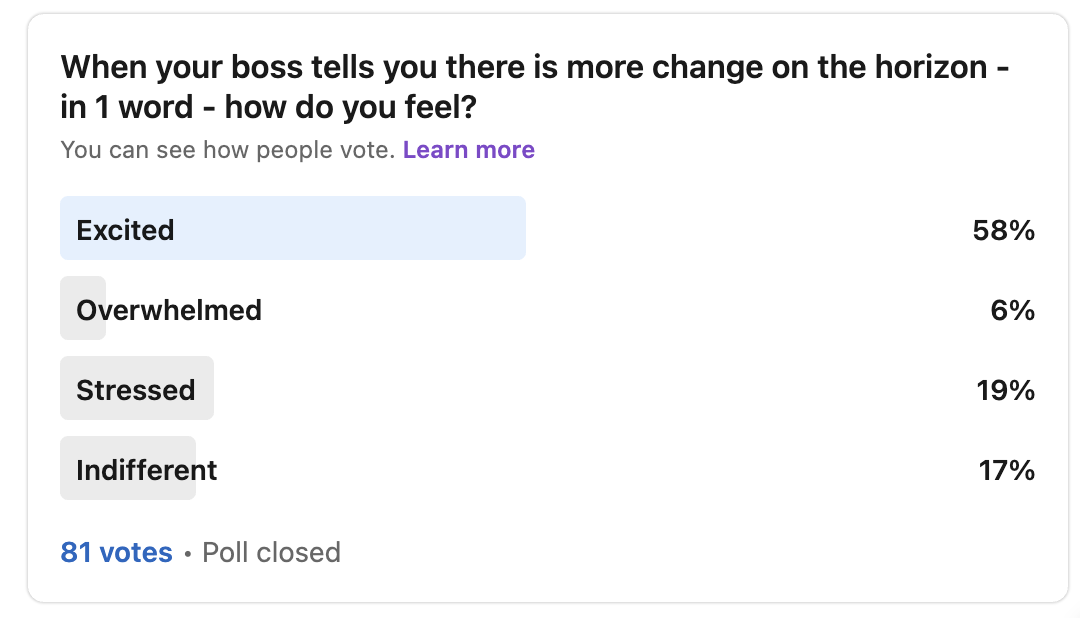
81 people completed a very simple poll that I sent out on LinkedIn recently. I wanted a one word answer which described the emotion people felt when their boss said there was more change about to happen.
My default view is (and now was) that most people are a bit fearful of change so I was pleasantly surprised when the responses came back that:
58% of the pollsters said they felt excited by change
For the organisations where those people work that feels like a real opportunity to tap into some positive energy. Maybe they could help people who are a bit less excited by change and talk to them, understand why they feel the way they do and find ways of allaying some of their stress or worries. Another interesting bit of feedback I got from someone was that, whilst 2020 has been painful for many, it has got rid of quite a few unpleasant aspects of working life for some people - namely the long commute or time away from home in hotels.
19% of the respondents felt stressed by the prospect of more change and 6% felt overwhelmed.
Leaders take note. If that’s typical profile in organisations then upcoming changes may have have a negative impact on about 25% of your people.
The remaining respondents said they were indifferent. For me that might be a warning bell - or maybe not. For organisations that do change well, indifference might be positive. Employees have confidence and trust that changes are implemented successfully and that their feelings will be sensitively taken into account. Or indifference could be a coping strategy that some people use to hope that the change might not happen and that they will carry on in their own way regardless. Without further digging and exploration it’s hard to know, but for me it raises some interesting questions.
So, what would I do, if I ran this poll in my own organisation?
Talk to the excited people and ask them why - get their ideas about how to spread their excitement to others and buddy them up with other colleagues
Listen to the stressed and overwhelmed people - explain why changes are happening, what it means to them and also try to relieve them of some of the factors that are causing them to feel the way they do
For the indifferent group, I’d really like to dig more deeply into why they chose that emotion. If there are some positives to be taken from what they feel - great, but if their indifference is more of ‘I don’t care’ - I’d like to understand what would motivate them and get them more engaged
Mine was a simple poll and you could drive a coach and horses through it in terms of any statistical validity, but as with most types of survey or research, they don’t provide all the answers but lead you to probe more deeply and learn why people feel the way they do. At an individual level that could make a difference.
If you want to get to work to learn a bit more about how I can build a better change environment in your organisation, please do get in touch: [email protected]
A simple poll won’t give all the answers, but it might prompt some interesting questions about how your people are feeling when faced with change.